

Research


Research
JTB Foundation-based Research
 The JTB Foundation is proud to support Dr. Andrew Landstrom, a pediatric cardiology and genetic scientist at Duke University School of Medicine. Dr. Landstrom specializes in caring for children and young adults with genetic diseases of the heart, including cardiac channelopathies and cardiomyopathies. He leads a basic science laboratory exploring the causes of sudden cardiac arrest-predisposing diseases with a goal of identifying children who are at-risk and developing new therapies to treat the underlying disease.
With funding from the JTB Foundation, Dr. Landstrom is working with colleagues to determine a cause of arrhythmic cardiomyopathy (AC) resulting from mutations in the gene DSP. DSP mutations cause development of fat in the normal heart muscle, something that is common among patients with AC, which results in arrhythmias and heart failure. In addition, DPS mutations tend to cause inflammation and can often lead to myocarditis. Myocarditis, also known as inflammatory cardiomyopathy, is an inflammation of the heart muscle that is not often seen other forms of AC. Myocarditis is typically caused by a viral infection and has been seen at higher rates in hospitalized patients with COVID 19.
The near-term aim of Dr. Landstrom’s study is to determine whether mutations in DSP lead to AC development that is worsened by inflammation, suggesting that inflammation fuels AC progression. To test this, he will use induced pluripotent stem cell-derived cardiac myocytes following genome editing to create a DSP mutation that is associated with inflammatory AC in a family. He will then test whether inflammatory triggers worsen the development of AC features in these cells. Dr. Landstrom’s work is designed to provide valuable insight into how inflammation impacts AC development in patients with DSP mutations. This research will increase understanding not only of a particular genetic cardiac disease, but it will also shed important light on why some patients with inflammation of the heart develop heart failure.
2024 Research Update
Gene Therapy Funding Provided To Duke University Shows Promising Results

Dr. Andrew Landstrom, MD, PhD – Director of the Duke Pediatric Research Scholars Program for Physician-Scientist Development
With support from the JTB Foundation, Duke University has been pursuing a new approach to gene therapy to treat patients with arrhythmic cardiomyopathy (ACM). Patients with ACM are at risk of developing life-threatening arrhythmias, which can lead to cardiac arrest and heart failure. There are no therapies that can slow or reverse the progression of ACM. We know that many forms of ACM are caused by genetic mutations that can be passed down in families. Understanding these genetic mutations is key to understanding who is at risk, how the disease progresses, and perhaps for new therapies. Recently, there has been tremendous excitement around correcting these mutations and whether fixing the genetic defects of patients might be a new therapeutic area for ACM. This is known as gene therapy.
The ability to deliver gene therapies to the heart has become of increasing interest. Duke University has been trialing a new approach for gene therapy using cardiac myocytes made from individuals with ACM. The lab has been working on packaging a new gene therapy into a specific kind of virus with a larger size capable of delivering a unique payload into the heart. This payload is too big for traditional gene therapy viruses. However, the new virus being used is able to not only carry the gene therapy but can successfully deliver it. When tested in human heart cells, this new virus can deliver a new gene therapy payload successfully, and the gene therapy survives within the heart cells for days and weeks with one treatment. In addition, the heart cells are tolerating the gene therapy well without signs of cell harm.
Current experiments in the Lab are working to show that this gene therapy approach can be effective in helping patients with ACM and that it corrects the cellular abnormalities that lead to arrhythmias and heart failure. The team hopes this approach might yield a new pathway for treating patients with ACM.
2023 Research Update!
Research moves forward at Duke with support from JTB
Generous support from the John Taylor Babbitt Foundation has catalyzed research exploring way in which mutations in DSP can cause life-threatening ventricular arrhythmias, leading to development of tools to test new therapies. The DSP gene provides instructions for making a protein called desmoplakin, which plays an essential role in providing strength and stability to cardiac tissue. New evidence has found that patients with mutations in DSP can develop both inflammation of the heart (myocarditis) and arrhythmic cardiomyopathy (ACM). This can result in sudden cardiac arrest which impacts adolescents and adults alike. Unfortunately, there are no therapies to prevent the disease from progressing or to reverse the disease.
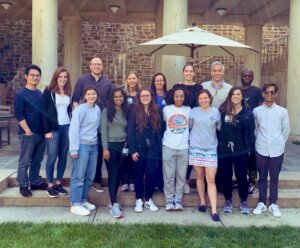 The JTB Foundation has brought together a diverse team of experts in the field, led by Dr. Andrew Landstrom (Associate Professor of Pediatrics and Cell Biology at Duke University) and including Dr. Anwar Chahal (Director of Cardiovascular Genetics and WellSpan Health) and Dr. Devyani Chowdhury (Director of Cardiology Care for Children Lancaster), to study how this disease develops with an overall goal of identifying new targets that might be used to develop new therapies.
Over the past year, this team identified a family with a new DSP mutation that led to both myocarditis and life-threatening ACM in multiple family members. A cutting-edge molecular tool, CRISPR/Cas9, was used to create the mutation which the family carried into a line of stem cells that were previously created from the blood of a healthy volunteer. These induced pluripotent stem cells (iPSCs) can be used to make, and study, nearly any tissue in the body to study disease, including tissues that are challenging to obtain directly from patients, such as the heart. Once validated, this “genome engineering” created a new iPSC line which contained the family’s DSP mutation.
When these iPSCs were then guided to differentiate into cardiac heart cells (iPSC-CMDSP), these cells could be compared with the original healthy volunteer iPSC-CM (iPSC-CMWT), to learn how this specific mutation changes the cardiac cells. While studies are still on-going, Dr. Landstrom’s team, found that these iPSC-CMDSP developed impairment in cardiac myocyte contraction when compared to the iPSC-CMWT, suggesting that the DSP mutation impairs proper contraction of the heart. In addition, iPSC-CMDSP developed an irregularity in the shape and orientation of the cells compared to the iPSC-CMWT, suggesting a defect in the way in which the heart cells develop and connect to one another. These findings suggest that the DSP mutation is disrupting how the cardiac myocytes form, function, and work together – in line with previous findings in the field.
This work is among the first to be done in human heart cells to determine how DSP mutations result in ACM development from a family with both ACM and recurrent myocarditis. Dr. Landstrom believes that with additional exploration, these iPSC-CMDSP will lead to critical new discoveries about how mutated DSP leads to both myocarditis and ACM which may lead to new targets for medication development or, potentially, gene therapy. Further, iPSC-CMDSP can serve as a “proving ground” to determine whether any candidate new therapy can fix the underlying myocardial disease.
2022 Saw Progress and Promise in Treating and Curing HCM
2022 saw not only a major advance in treatment for hypertrophic cardiomyopathy (HCM), but also the launch of a new effort aimed at curing this disease and related cardiomyopathies. On the treatment side, the U.S. Food and Drug Administration (FDA) approved a first-of-its-kind medication for treatment of a class of HCM patients in May. The drug, sold by Bristol Myer Squibb (BMS) as CAMZYOS (mavacamten), treats adults with symptomatic obstructive HCM, and has been shown to increase capacity for activity and reduce shortness of breath. CAMZYOS targets the source of symptomatic, obstructive HCM and is the first and only FDA-approved treatment of its kind.
The path to mavacamten was laid in 2021 by four physicians and researchers – Christine Seidman, James Spudich, Jonathan Seidman, and Leslie Leinwand — who co-founded a company called MyoKardia. MyoKardia focused on discovering, developing, and commercializing targeted therapies to treat those heritable cardiomyopathies and genetically-driven forms of heart failure that result from biomechanical defects in heart muscle contraction. MyoKardia developed mavacamten and, in 2020, BMS acquired MyoKardia, subsequently bringing the drug to market as CAMZYOS.
Dr. Christine Seidman is also a co-leader on an award-winning project called CureHeart. Led by Professor Hugh Watkins of the University of Oxford, CureHeart aims to develop the first cures for inherited heart muscle diseases by applying genetic therapies to repair faulty genes. In July 2022, CureHeart was selected as the winner of the British Heart Foundation’s Big Beat Challenge, a competitive, £30 million innovation project targeting unmet needs in heart disease.
CureHeart will utilize gene-editing technology to cure inherited heart muscle diseases in two ways. First, in cases where the faulty gene produces an abnormal protein in the heart, the goal is to correct or silence the faulty gene by re-writing single spelling mistakes or by switching off the entire copy of the faulty gene. Second, in cases where the faulty gene fails to produce enough protein for the heart muscle to function properly, the goal is to increase production of the protein by correcting the function of the faulty copy of the gene or by stimulating the normal copy of the gene to produce more.
CureHeart leverages a multinational research partnership including leading experts from the UK, USA, and Singapore in complementary areas of science and medicine. With the Big Beat Challenge win, CureHeart is poised to make ground-breaking progress in ameliorating and curing heritable cardiomyopathies. 2022 has brought new firsts to the treatment of HCM and we look forward to more exciting developments in 2023.


